
We work the way we do because traditional systems prioritize pay over purpose, often leading to disengagement and dissatisfaction among employees. However, intrinsic motivators—autonomy, mastery, and impact—are the true drivers of fulfillment and can transform the workplace experience.
You can make work, work for you, by actively reshaping your role to better fit your strengths and passions, seeking out purpose in your daily tasks, and aligning your career with your personal passions and values. By cultivating an environment that emphasizes growth and creativity, you not only enhance your own job satisfaction but also contribute to a positive organizational culture, inspiring those around you to pursue their own paths to fulfillment.

Why Work is Structured the Way It Is
- The Paycheck Myth: Modern workplaces are heavily rooted in traditional economic theories which falsely assume people are inherently lazy and work primarily for financial compensation. This outdated perspective fails to recognize that many individuals are motivated by intrinsic factors such as purpose, passion, and the desire for personal growth, leading to a disconnect between employee engagement and monetary incentives. Such misconceptions can hinder the development of a more effective and fulfilling work environment.
- Rules Over Meaning: Over time, rigid rules, micromanagement, and financial incentives have stripped the meaning out of many jobs, often turning good work into bad. These excessive constraints reduce individual creativity, foster dissatisfaction, and diminish the sense of accomplishment that comes from genuinely meaningful work, leading to a disengaged workforce that merely complies rather than genuinely contributes.
- The “Job vs. Calling” Divide: Psychological research outlined in Barry Schwartz’s book, Why We Work, explains that how we frame our work (as a Job, Career, or Calling) dictates our overall fulfillment, regardless of the industry. This division not only influences our day-to-day experiences but also impacts our long-term career satisfaction and personal happiness. Understanding this concept can lead to deeper insights into our motivations, helping us align our daily tasks with our true passions and aspirations for a more meaningful work life.
How to Make Work, Work for You
- Exercise Job Crafting: You do not necessarily need to quit your job to find happiness and fulfillment. Job crafting involves actively redefining your current job to align more closely with your strengths, passions, and purpose. It encourages you to take ownership of your work experience and adapt your role in a way that enhances job satisfaction. Seek out small projects that let you take control of your daily tasks, allowing you to infuse your daily routine with creativity and meaningful contributions. By making intentional adjustments to your responsibilities, you can create a work environment that is more conducive to your personal and professional growth.
- Assess Your “Why”: Take time for self-reflection. It’s crucial to delve deeply into your motivations and reasons behind your actions. Identify the various activities that make you lose track of time and pay attention to what tasks you naturally gravitate toward. Consider journaling your thoughts or sharing them with a trusted friend to gain more clarity on what truly energizes you and captures your interest.
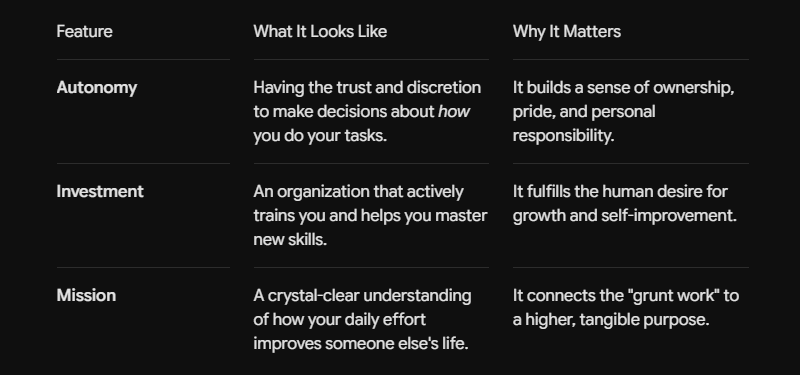
- Prioritize the 3 Intrinsic Motivators: Autonomy – Seek opportunities where you can dictate how and when your tasks are completed. Mastery: Dedicate time to developing new skills. Purpose: Find the human connection in your work. Whether you are directly helping a client or supporting your team, identifying how your role positively impacts others is key to unlocking fulfillment.
The Four Main Worker Styles
Work styles represent how you naturally approach tasks, solve problems, and collaborate in the workplace. By understanding your dominant style—whether you are Logical, Detail-oriented, Idea-oriented, or Supportive—you can boost your productivity, leverage your strengths, and better communicate with coworkers. Below are the four primary working styles and their defining traits:
Logical (The Driver/Doer)
Logical workers are analytical, data-driven, and focused on tangible results. They excel at complex problem-solving and making quick, efficient decisions.
- Key Strengths: Decisive, highly focused, and pragmatic.
- Areas to Improve: May sometimes overlook planning, fail to communicate their actions, or risk burnout.
Detail-Oriented (The Guardian/Learner)
Detail-oriented individuals value organization, structure, and finely tuned processes. They supply a sense of order and are highly reliable.
- Key Strengths: Risk-averse, accurate, and extremely strategic.
- Areas to Improve: Can sometimes work too slowly or miss the broader, big picture.
Idea-Oriented (The Pioneer/Promoter)
Idea-oriented workers are visionaries who generate creative energy and bring enthusiasm to the workplace. They love exploring blank canvases and brainstorming new concepts.
- Key Strengths: Inspires change, adaptable, and great at starting projects.
- Areas to Improve: Can become unstructured, neglect small details, and struggle to finish what they start.
Supportive (The Integrator/Amiable)
Supportive workers are relationship builders who thrive on team harmony and empathy. They act as the glue that keeps a positive collaborative space intact.
- Key Strengths: Strong communicators, emotionally intelligent, and great mediators.
- Areas to Improve: Can be overly sensitive to criticism and struggle to make firm, unilateral decisions

Conclusion:
Traditional systems fail employees by prioritizing financial compensation over meaningful purpose, which breeds widespread disengagement. True workplace fulfillment is driven by intrinsic motivators: autonomy, mastery, and purpose. You can reclaim control over your professional life through “job crafting”—actively reshaping your daily role, seeking out purpose, and aligning your responsibilities with your personal strengths and values. Ultimately, cultivating an environment focused on growth and creativity not only boosts your own job satisfaction, but also creates a ripple effect that inspires a healthier, more fulfilled organizational culture.







 A Vibrational Space
Leave a comment