

Dealing with tough family members means you’ve got to set some clear boundaries, adjust your expectations by accepting them for who they are (not who you want them to be), talk to them calmly and directly (like using “I” statements), take breaks when you need to, and make sure you take care of yourself emotionally and get support. Also, try not to get into arguments or think you can “fix” them.

Ways to Connect and Interact:
- Figure out the “Hot Topics”: Reflect on which subjects (like politics, work stuff, or personal decisions) tend to stir up trouble and try not to dive into those chats.
- Communicate Clearly: Use “I” statements to express your needs without being accusatory (e.g., “I feel uncomfortable when we discuss my finances, so I’m going to change the subject”).
- The “Broken Record” Technique: If a family member won’t drop the topic, just keep saying something like “I’m not talking about this now” calmly over and over until they get the hint, if you have to leave because they won’t accept it, remember you made the effort – they aren’t respecting your boundary.
- Keep it Neutral: You get to pick when and where to hang out. Meeting up in public or low-key spots can really help everyone stay cool and behave better.
- Stay Relaxed & Detached: Keep your cool and be mindful so you don’t overreact; remember, their behavior says more about them than it does about you.

Adjust Your Expectations
Remember: Some of the frustration in difficult relationships comes from hoping someone will act differently than they typically do.
- Just Roll with It: Quit stressing about trying to “fix” or change them. Recognize that the way they act now is probably how they’re gonna keep acting.
- Lower Your Guard, Not Your Standards: Don’t be surprised when people act like you’d expect them to. Keeping your expectations in check helps you maintain your emotional balance and not get too worked up.
- The “Let Them” Theory (Mel Robbins): If a family member decides to be a pain or act childish, just “let them” be that way without stressing about fixing them or making things better.
Keep Your Emotions in Check
Sometimes you have to cut out the drama to keep your peace.
- Don’t Take It Personally: Realize that their behavior is usually a reflection of their own internal struggles, pain, or lack of emotional maturity, rather than a reflection of your worth.
- Practice Presence: When in their company, try to stay grounded and observe their behavior objectively rather than getting sucked into the emotional whirlpool.
- Take Time-Outs: It’s totally fine to take a breather when things get a bit heavy. Just step into another room, go for a quick stroll, or even duck out early if things get too stressful.
How can I distinguish between constructive criticism and unfair attacks from family members?
First, distinguish between constructive criticism or an unfair attack:
- Constructive Criticism: Is a heartfelt gesture meant to support your growth, address challenges, or enhance certain behaviors. It stems from a genuine concern for your well-being and a commitment to nurturing the relationship.
- Unfair Attacks: Frequently designed to undermine, stigmatize, or exert dominance and control. The objective is to induce feelings of “wrongness” or “incompetence” rather than provide assistance.
Next, consider the content of the message, is there a recommendation for action, or is it just attacking your character:
- Constructive Criticism: It’s all about pointing out a specific thing that happened (like, “Hey, I saw you were running late today”) and giving some helpful tips on how to do better. The goal is to share insights that can spark positive change while still being respectful. It’s important to keep communication clear and open, encouraging a chat that helps everyone understand and grow together.
- Unfair Attacks: Targets your character or personality (e.g., “You are always lazy” or “You never do anything right”). These comments are often vague, generalized, and lack any helpful direction.
Finally, recognize the delivery:
- Constructive Criticism: Usually given in a calm way and one-on-one. The person often points out what you’re doing great before dropping some suggestions for improvement or is voicing genuine concern in their approach.
- Unfair Attacks: These usually come off as mean, using sarcastic comments or mocking tones. They often happen in public to embarrass someone more and tend to throw around “always” or “never” to make things sound worse.
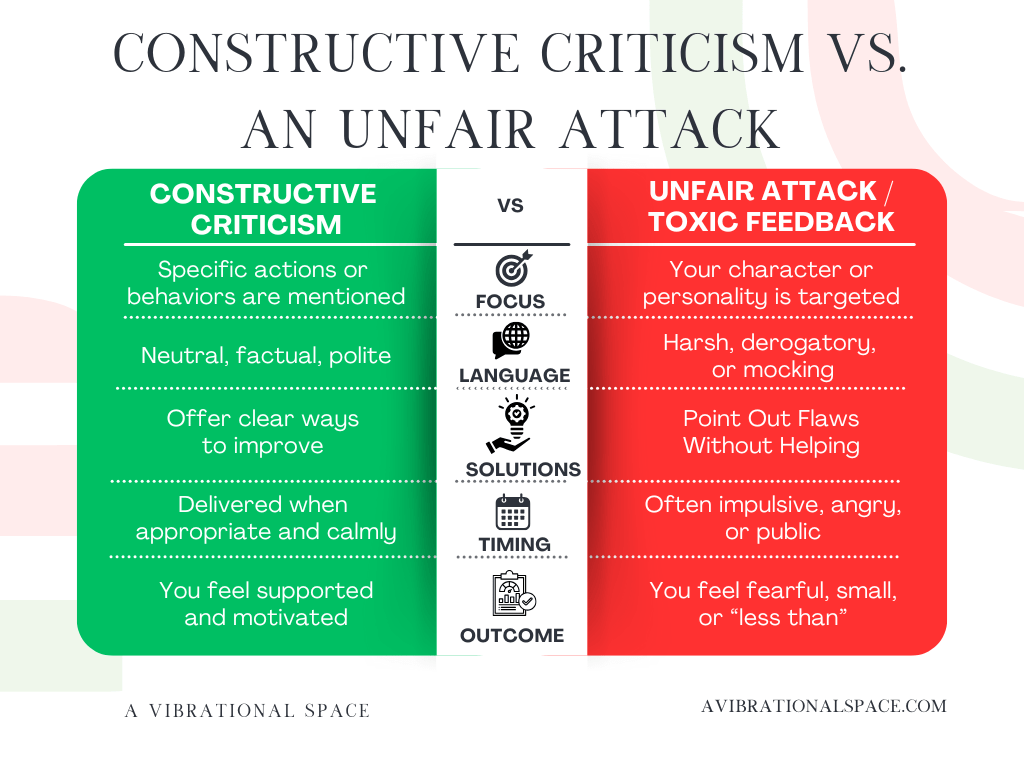
When you address the criticism thoughtfully and it seems to “melt away” or results in an apology, it’s a sign that the critique was likely justified from the other perspective. However, if the person responds defensively, denies their actions, or redirects the blame onto you, it’s understandable to feel that the criticism could be unfair attack.
Keeping Yourself Sane
- Limit Exposure: Try to hang out with them less, or just take some breaks when you need to.
- Take Care of Yourself: Do things that make you happy and relax, like writing in a journal, working out, or hanging out with friends who have your back.
- Seek Support: Chat with your buddies, hop into support groups, or hit up a therapist to work through your feelings and figure out some good coping strategies.
- Know When to Walk Away: If a relationship is abusive or causes severe mental health issues, you have the right to limit or even end contact entirely to ensure your safety and sanity.

When to Consider Distance
- Create Space: If interactions are consistently harmful and detrimental to your well-being, it’s okay to create distance, even if it ultimately means establishing no or low contact with certain individuals, to prioritize your mental health and emotional stability in the long run.
- Focus on Healthy Relationships: Invest energy in family members who uplift you by spending quality time together, communicating openly about your feelings, and supporting each other in both good times and challenging moments.
Video Spotlight:
Resources:
- How to deal with a toxic parent, sibling, or other family member.
- Dealing with Difficult Family Dynamics
- 7 Strategies to Deal With Difficult Family Members
- How to deal with toxic family members: 7 tips to help you cope
- 10 Ways To Set Boundaries With Difficult Family Members
- Keeping It Relative: 5 Ways To Deal With Difficult Relatives
 A Vibrational Space
Leave a comment