

Looking after your mental health in the new year is all about keeping it real with your goals—think better sleep, eating healthier, working out a bit, and hanging out with friends. Don’t forget to throw in some mindfulness, be kind to yourself, and maybe cut back on social media, too.
Instead of going for big, shocking changes, aim for small, steady routines, talk to yourself positively, and know when it’s time to reach out for help so you can bounce back and feel good, instead of chasing after some “perfect” version of yourself.
As we gear up for the new year, let’s ditch those high-pressure resolutions and focus on building some relaxing, self-care habits instead.

Healthy New Year’s Intentions
- Practice Mindfulness & Self-Compassion: Take some time to meditate, breathe easy, hang out in nature, or throw some positive affirmations at your inner critic to keep it at bay.
- Get Better Sleep & Don’t Eat Your Weight in Cookies: Try to catch 7-8 hours of good sleep and fill up on delicious (healthy) eats to boost your mood and energy. [Yes I‘m tempted as a big fan of gingerbread cookies.]
- Stay Active: Getting off your butt and moving around is a great way to kick stress to the curb.
- Connect with Others: Keep your relationships strong to fend off feelings of loneliness by reaching out to your loved ones.
- Cut Down on Social Media: Dial back the time you spend scrolling to chill out and stop comparing yourself to others.
- Set Realistic Goals: Use the SMART (Specific, Measurable, Achievable, Relevant, Time-bound) framework and break big goals into small, manageable steps.
- Develop Hobbies & Interests: Engage in activities you enjoy to boost well-being
Mindset Shifts for the New Year
- Be Kind to Yourself: Accept who you are now and avoid the pressure to become a completely different person. Instead, recognize the unique qualities and strengths that make you who you are, and appreciate the journey of growth and self-discovery. Remind yourself that it’s okay to have flaws and that self-compassion is a vital part of the process.
- Focus on “Intentions” over “Resolutions”: Think of it this way: instead of locking yourself into a rigid resolution, just set some nice, easy intentions. It takes the pressure off and makes personal growth feel more like a fun journey rather than a stressful chore. You get to roll with the punches of life and keep things flexible.
- Own Your Feelings: It’s okay (and normal) to feel anxious about the new year; just acknowledge those feelings without judgment. Recognize that these emotions are part of being human, and it’s essential to accept them as they come. Don’t be too hard on yourself, and remember that you’re not alone in this experience; many people feel similarly, especially during times of change and uncertainty.
More Americans are Making Resolutions:
As we headed into 2025, 33% of Americans were making their mental health a new year’s resolution, which is up 5% from the previous year and the highest polling number since the American Psychiatric Association (APA) started asking about it in 2021. Younger generations are leaning into this, with 48% of 18-34-year-olds making a mental health pledge compared to just 13% of people 65 and older. Overall, 81% of people are making some kind of new year’s resolution, while the other categories have stayed pretty much the same:
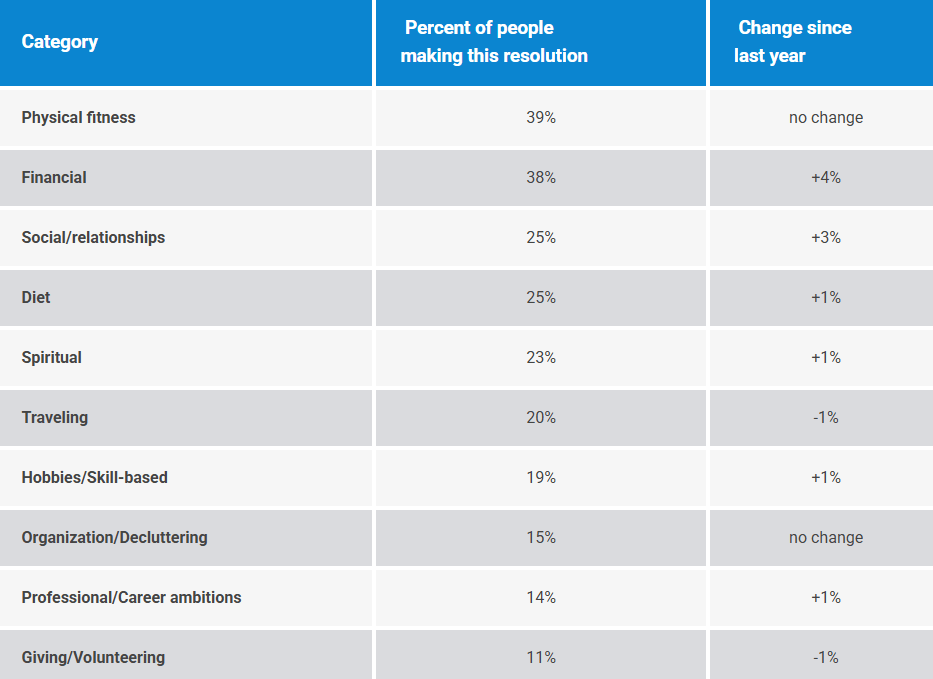
Source: https://www.psychiatry.org/news-room/news-releases/more-new-years-mental-health-resolutions These results were drawn from the APA Healthy Minds Monthly Poll, which was fielded by Morning Consult Dec. 7-8, 2024, among 2,220 adults. APA’s Healthy Minds Monthly tracks timely mental health issues throughout the year. See past Healthy Minds Monthly polls. For a copy of the results, contact press@psych.org.
Common New Year Challenges
- Seasonal Affective Disorder (SAD): The decrease in sunlight during winter can lead to seasonal depression. Consider light therapy or spending time outdoors during the brightest part of the day.
- Resolution Pressure: The societal push for a “clean slate” can cause overwhelming anxiety. It is okay to set goals when you feel ready, rather than strictly on January 1st.
- Post-Holiday Blues: The transition from holiday festivities to the quiet of January can lead to feelings of loneliness or isolation.
Does the New Year make you feel sad? You’re not alone.

The start of the new year adds unique challenges, such as societal pressures to reflect on the past year and set the tone for the next. This period often invites a mix of excitement and anxiety, as individuals feel compelled to evaluate their accomplishments and shortcomings.
Tips to Combat New Year’s Anxiety
1. Focus on Your Wins, Not Others: It’s essential to prioritize your own achievements and personal growth rather than comparing yourself to those around you. In a world constantly showcasing the successes of others, it’s easy to feel overshadowed or inadequate.
Remember that your journey is unique, and every small victory contributes to your overall progression. Embrace your successes, no matter how minor they may seem, and use them as motivation to propel yourself forward. By concentrating on your wins, you reinforce your self-worth and develop a healthier mindset that fosters resilience.
2. Distract Yourself From Negative Thoughts: Finding ways to divert your attention from negative thoughts can be a powerful strategy for improving your mental health and well-being. Engaging in activities that require focus, such as reading a captivating book, going for a brisk walk in nature, or picking up a creative hobby can effectively shift your mind away from distressing thoughts.
Additionally, connecting with friends or loved ones can provide a supportive environment, allowing for meaningful conversations that uplift your mood. Exploring mindfulness techniques, such as meditation or deep-breathing exercises, can also help ground you in the present moment, making it easier to let go of negative spirals.
3. Prioritize Self-Care and Positivity
In today’s fast-paced world, it is more important than ever to prioritize self-care and cultivate a positive mindset. Taking time for oneself is not a luxury but a necessity that enables individuals to recharge, reflect, and rejuvenate.
Engaging in self-care activities—whether it’s reading a book, going for a walk in nature, or practicing mindfulness—can significantly improve overall well-being. Ultimately, prioritizing self-care and positivity fosters a healthier lifestyle, which contributes to greater happiness and fulfillment in both personal and professional spheres.
Mindfulness Doesn’t Have to Be Complicated
Mindful Walking: Instead of walking on “auto-pilot,” focus on the physical sensation of your feet making contact with the ground. Pay attention to the rhythm of your steps and the movement of your legs. (I enjoy walking meditation, I will post about it in depth eventually)
Everyday Chore Focus: Pick a routine task, such as washing dishes or brushing your teeth, and give it your full attention. Notice the temperature of the water, the scent of the soap, and the sounds of the activity.
The STOP Technique: A quick “micro-meditation” for stressful moments:
- Stop what you are doing.
- Take a conscious breath.
- Observe your thoughts and physical sensations.
- Proceed with more awareness.
Box Breathing: Inhale deeply and slowly through the nose for 4 counts, hold for 4, exhale out of the mouth for 4, and hold again for 4. Repeat. (Doing this before classes helped me be more present for the lectures. Now it helps when I feel overwhelmed.)
When to Seek Help
Don’t hesitate to reach out to a therapist or counselor if you’re struggling; it’s a transformative step for your mental health.
Video Spotlight:
Resources:
- More Americans Making New Year’s Mental Health Resolutions Leading Into 2025
- Coping with New Year’s Depression: Strategies for a Healthier Year
- 20 mindfulness practices that take five minutes (or less!)
- New Year, Same You — and That’s OK!
- New Year’s Resolutions Statistics 2024
- Mental Health Resolutions for the New Year
 A Vibrational Space
Leave a comment